Prof. Martin Head-Gordon Wins the 2020 Schrödinger Medal of WATOC! | |
| February 15, 2020 | |
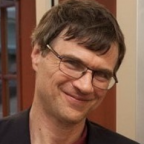
| Q-Chem developer and Scientific Advisor, Martin Head-Gordon, has been informed that he is to receive the 2020 Schrödinger Medal of WATOC. This is awarded every year to one "outstanding theoretical and computational chemist." The medalist is selected by the WATOC Board through an electronic ballot. WATOC members can suggest candidates by email… Read More |
John Herbert - Recipient of 2020 Edward W. Morley Award | |
| January 27, 2020 | |

| Congratulations to Q-Chem developer and Board Member, John Herbert, who is the recipient of the 2020 Edward W. Morley Award from the Cleveland Section of the American Chemical Society! The award recognizes significant contributions to chemistry through advances in research, teaching, engineering, research administration and public service, outstanding service to humanity, or to industrial… Read More |
Q-Chem is Hiring | |
| November 1, 2019 | |
| Q-CHEM IS HIRING: Research Associate in Computational Chemistry: |
Anna Krylov is Awarded the 2020 Earle K. Plyler Prize for Molecular Spectroscopy & Dynamics | |
| September 30, 2019 | |

| Congratulations to Q-Chem President and developer, Anna Krylov, on being awarded the 2020 Earle K. Plyler Prize for Molecular Spectroscopy & Dynamics "For her innovative work developing high accuracy electronic structure theory to inspire interpretation of spectroscopy of radicals, excited states, and ionization resonances in small molecules, biomolecules, and condensed phase solutes." This award, sponsored by… Read More |
Q-Chem Has a New President | |
| September 30, 2019 | |

| We are proud to announce that our board member/developer, Prof. Anna Krylov, has taken the reins as President of Q-Chem. We look forward to much growth and prosperity under her wise leadership! We would also like to take this time to send out our immense appreciation to our former President, Prof. Peter Gill, for all of his years of excellent service and leadership. We feel so lucky and honored to have such an amazing team here at Q-Chem. There is none better. Here's… Read More |
Thomas Jagau Receives European Research Council Starting Grant | |
| September 30, 2019 | |

| Congratulations to Q-Chem developer, Thomas Jagau, of the University of Munich, Germany, who has landed a European Research Council 2019 Starting Grant! Starting Grants are awarded to early-career researchers of any nationality with two to seven years of experience following completion of their PhD and having a scientific track record that shows great promise. Their research must be conducted in a public or… Read More |
Thomas Jagau Awarded the Hellmann-Award | |
| September 26, 2019 | |

| Congratulations to Q-Chem developer, Thomas Jagau, on being awarded the Hans G. A. Hellmann-Prize for Theoretical Chemistry for young German-speaking theoretical chemists! This award commemorates a pioneer of Quantum Chemistry, Hans G. A. Hellmann (1903 - 1938). It is periodically awarded to promising young German theoretical chemists to honor their accomplishments.
|
Prof. Shirin Faraji Joins the Q-Chem Board of Directors | |
| July 27, 2019 | |

| Q-Chem is proud to announce our newest board member, Dr. Shirin Faraji of the University of Groningen. Welcome, Shirin! |
Prof. Martin Head-Gordon elected to Royal Society of the UK | |
| June 7, 2019 | |

| Congratulations to Q-Chem Advisor and developer, Prof. Martin Head-Gordon, of the University of California at Berkeley, on being elected to the extremely prestigious Royal Society of the UK. Posted citation reads, "Head-Gordon has advanced quantum chemistry in three critical components - theory, algorithms, and software. This includes major advances in foundational quantum mechanical wavefunction methods, practical density functional theory and the interpretation of quantum… Read More |
Publication by Q-Chem Developers: "Feshbach-Fano Approach for Calculation of Auger Decay Rates Using Equation-of-Motion Coupled-Cluster Wave Functions: Theory and Implementation" | |
| November 15, 2020 | |
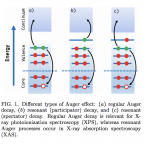
| Congratulations to Wojciech Skomorowski and Anna I. Krylov on their new theory for calculating Auger decay rates using equation-of-motion coupled-cluster wave-functions, "Feshbach-Fano approach for the calculation of Auger decay rates using equation-of-motion coupled-cluster wave functions: Theory and implementation" Skomorowski, Wojciech; Krylov, Anna (2020): Feshbach-Fano Approach for Calculation of Auger Decay Rates Using Equation-of-Motion Coupled-Cluster Wave Functions: Theory… Read More |
Announcing the Q-Chem 6.1 Release |
| July 10, 2023 |
|
Q-Chem is pleased to announce the release of Q-Chem 6.1. A variety of new features have been added, including force decomposition analysis,… Read More |
Q-Chem Webinar 69: ADC for Electron Detachment and Attachment (Wormit Award) |
| June 19, 2023 |
|
Quantum-chemical methods based on Algebraic Diagrammatic Construction (ADC) theory have been around for more than 40 years. They are based on perturbation theory and have served as a basis for a… Read More |
Q-Chem Webinar 68: Orbital optimized density functional theory for core-level excited states and applications to molecular symmetry breaking |
| May 11, 2023 |
|
Electronic excited states with singly occupied inner shells are challenging to model with traditional linear response methods like time… Read More |
Q-Chem Developer Felix Plasser Awarded EuChemS Walter Thiel Award |
| April 2, 2023 |

|
Congratulations to Q-Chem developer Felix Plasser, who has been awarded the EuChemS Walter Thiel Award in Computational and Theoretical Chemistry! This award is recognizes the exemplary scientific… Read More |
Q-Chem Developer Thomas Jagau Awarded 2023 Dirac Award |
| February 16, 2023 |
|
Q-Chem is very pleased to congratulate Thomas Jagau on his receipt of the prestigious 2023 Dirac Medal! The Dirac Medal is awarded annually to an… Read More |