
Q-Chem Newsletter: February 16, 2026
February 16th, 2026

2026 Virtual Winter School on Computational Chemistry: Recordings Available!
Q-Chem was pleased to be one of the sponsors of the 2026 Virtual Winter School on Computational Chemistry! We also hosted not one but two Q-Chem workshops, with talks and hands-on exercises led by experts from the Q-Chem board and team.
You can view the recordings and exercises from the workshop here. ⧉ Thank you to the organizers, speakers, and attendees for making the workshop a success!
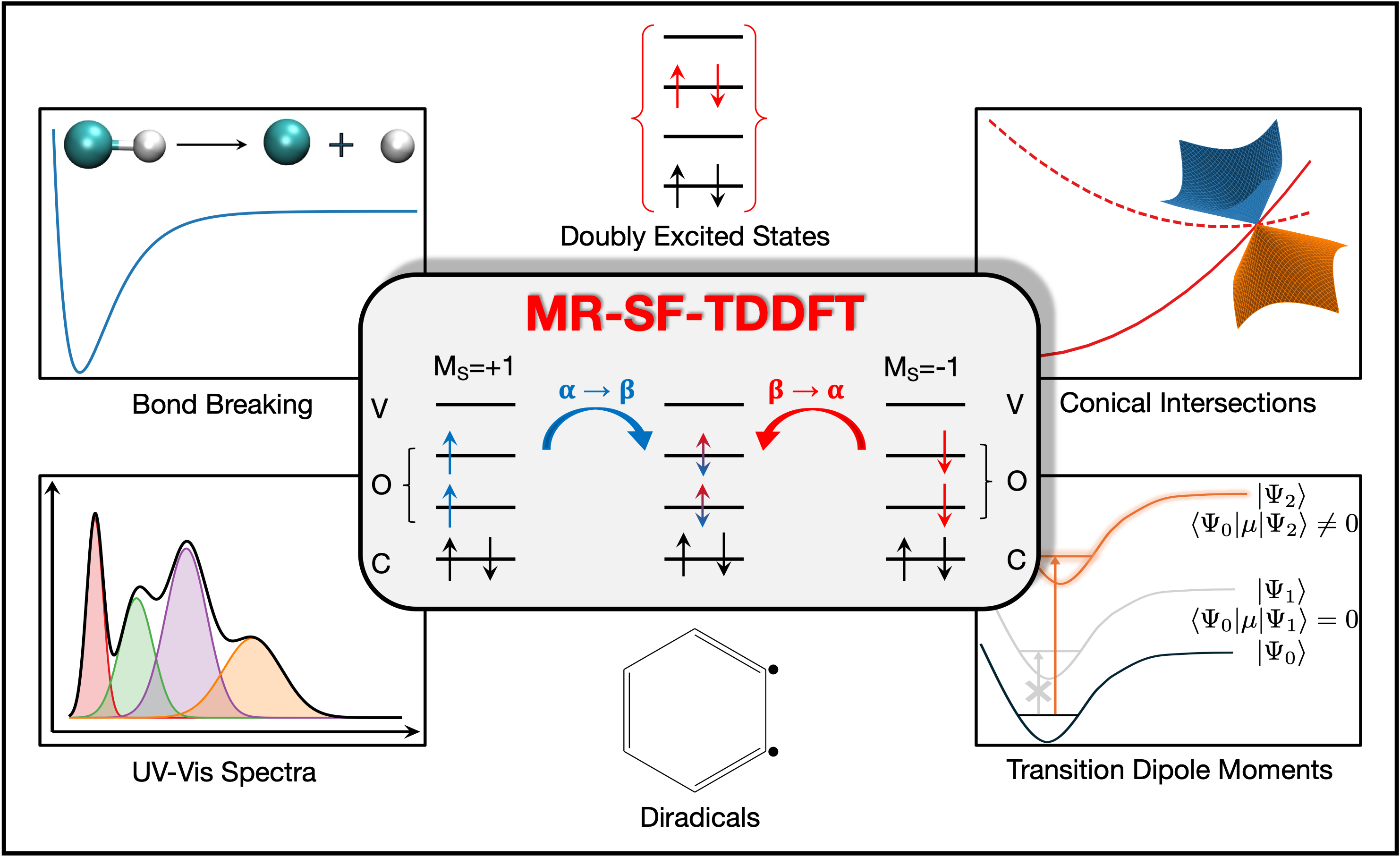
Feature of the Month: Mixed-Reference SF-DFT
Recent Publication Highlights
Fragme∩t Used for Modeling Protein-Ligand Interactions
Energy-Screened Many-Body Expansion for Protein–Ligand Interactions: Examining Convergence for Metalloenzymes through Seven-Body Interactions. ⧉ Paige E Bowling, Dustin R Broderick, and John M Herbert. Preprint. 2026.
In this recent preprint, Q-Chem developers perform large-scale fragment-based predictions of protein-ligand interactions via a new energy-based screening protocol for many-body expansion. They implement their new approach in Fragme∩t, an open-source fragmentation code which uses Q-Chem as the underlying engine.
Check out Fragme∩t's documentation here ⧉, and you can try Q-Chem here! ⧉
New DFT Functional for Strongly Correlated Systems
Reaching for Transition-Metal Chemical Accuracy by Adding Ladders to Fifth-Rung Density Functionals. ⧉ Ella R Ransford and Kevin Carter-Fenk. Preprint. 2026.
Strong correlation, often found in transition metal complexes, remains a challenging problem for DFT. In this recent preprint, Q-Chem developers Ella Ransford and Kevin Carter-Fenk replace the MP2 component (which does not handle strong correlation properly) with Coulomb-attenuated linearized hole-hole ladder coupled-cluster correlation, creating the ωB97L-V double-hybrid functional.
Their new functional handles strongly correlated systems well, modeling covalent bond dissociation properly and achieving sub-kcal/mol accuracy for the metal-organic reaction barrier heights. All calculations in the paper were run with a developer version of Q-Chem. You can find out more about becoming a developer here!
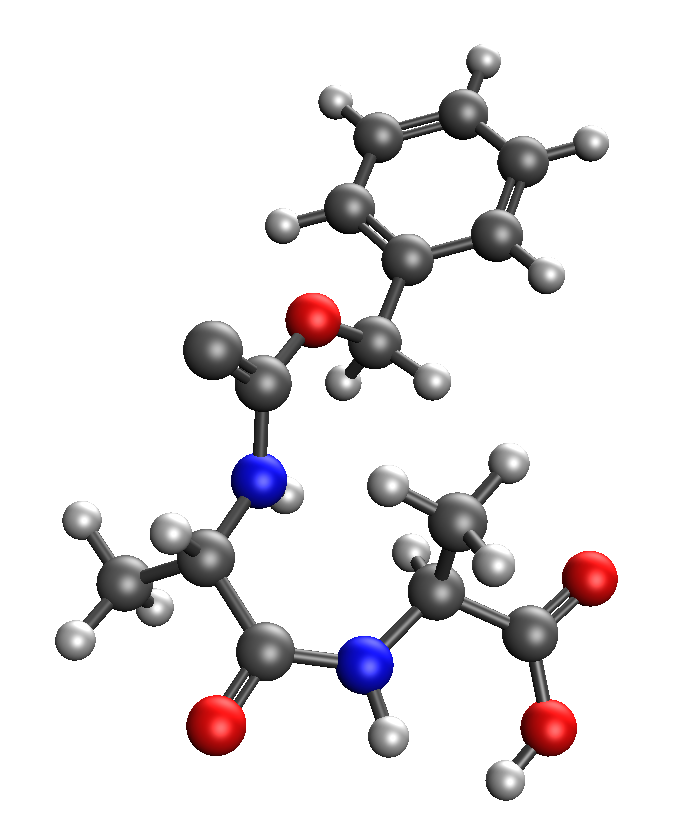
Studying Isomers and Spectroscopic Signatures of Z-Alanine
Transition State Models for Better Energy Storage
Transition State Model for the Manganese-Based Chemical Hydrogen Battery. ⧉ Krishnapriya Anattil Unnikrishnan and Rositha Kuniyil. ACS Catalysis. 2026.
In this recent paper, researchers use transition state models to study carbon-neutral storage and release of hydrogen for green energy applications. Alongside features from several other packages, they use Q-Chem's second-generation EDA to explore of the interaction energies of transition states.
Additional Publication Highlights
For the most up-to-date paper highlights, follow us on LinkedIn ⧉ , X ⧉ , or BlueSky ⧉ ! Want to see your recent paper or preprint featured on our social media posts or in our newsletter? Submit suggestions using our new form here! ⧉